The Material Debate in Solar Carport Mounting: Why Steel Remains the Most Reliable Choice?
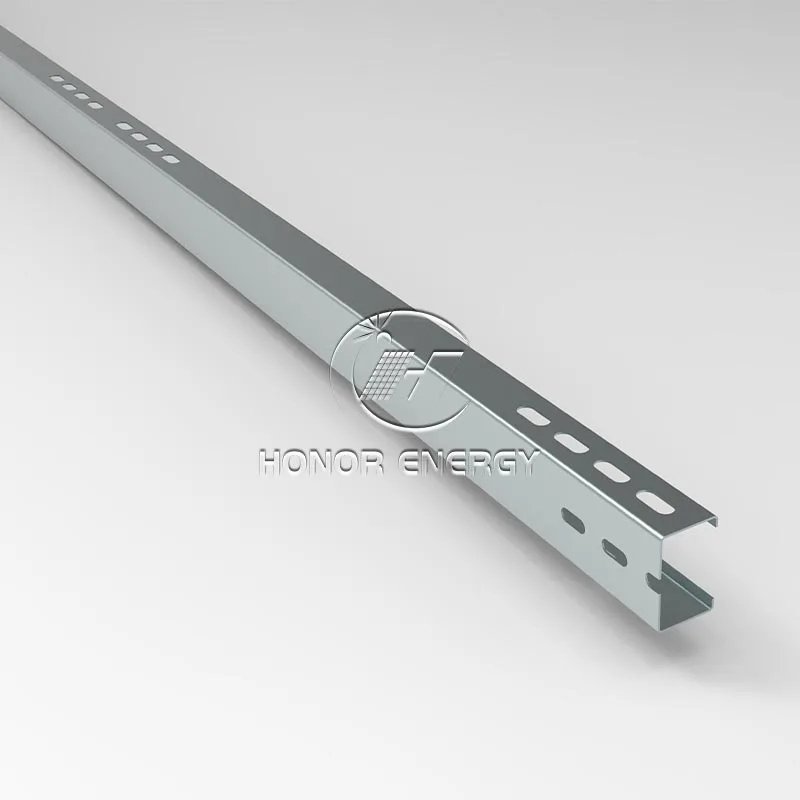
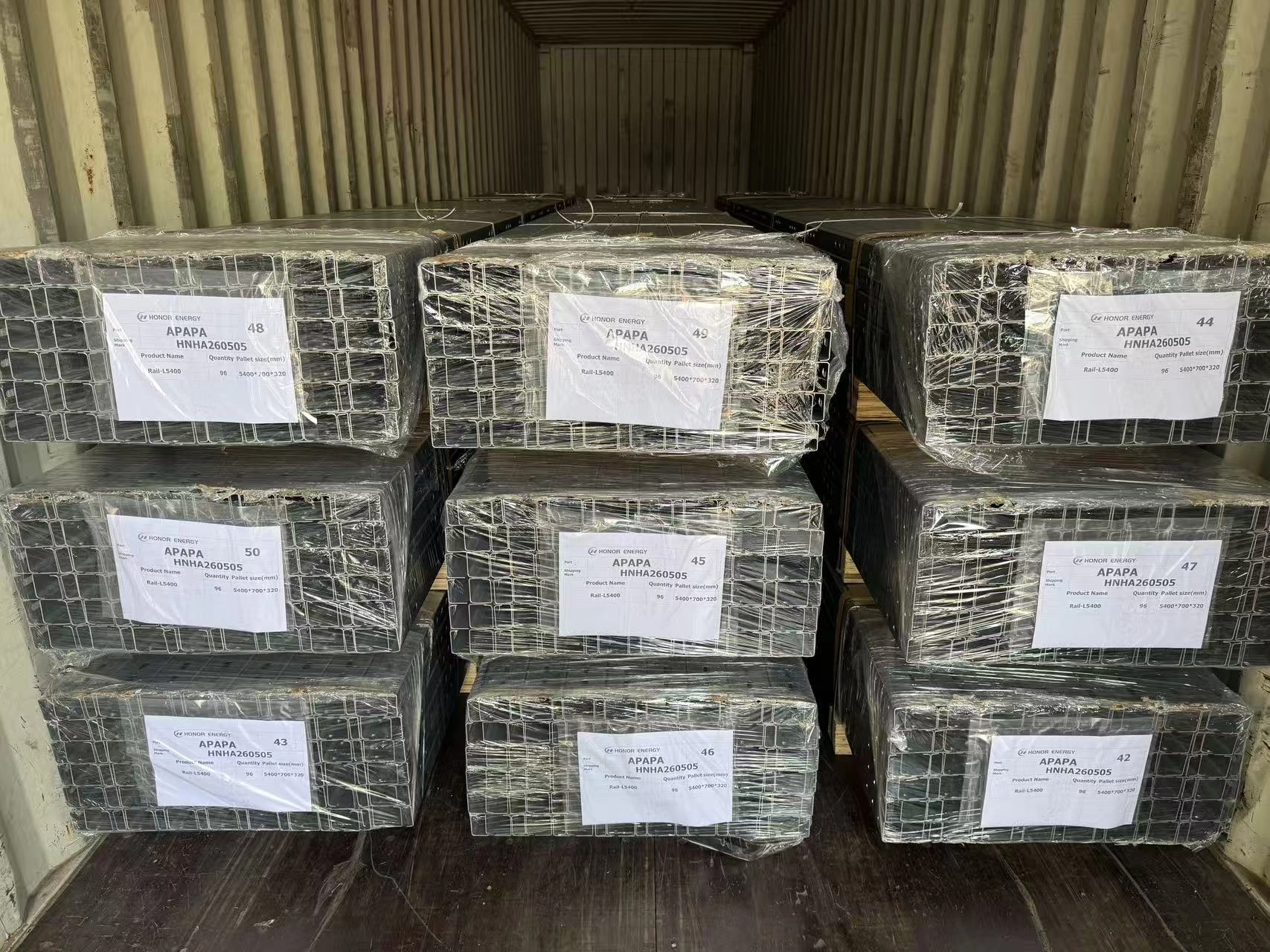
Xiamen Honor Energy has invested considerable time and effort this year into Solar Carport Mounting Systems. There has been a lot of noise about aluminium racks lately – lightweight, corrosion-resistant, aesthetically pleasing. Everyone knows the selling points. But after running the numbers, we have kept our primary recommendation on steel. Not because we are conservative – but because steel, particularly hot-dip galvanised and zinc-aluminium-magnesium coated steel, simply delivers better overall value in carport applications.
How big is this market, really?
We have spent a fair amount of time this year digging through various market reports. The numbers vary from source to source, but the direction is consistent across all of them. HTF Market Intelligence puts the global carport racking system market at roughly US$1.98 billion in 2025, projected to hit US$3.864 billion by 2032, which works out to a CAGR of about 10.2%. One figure that caught our attention was the annual sales volume – around 98,000 units globally last year, with an average selling price just over US$20,000 per unit. We did our own cross-checking, talking to a few old contacts who work on overseas projects, and the numbers held up pretty well. It is not a massive market compared to utility-scale ground mounts, but the growth slope is steep and still accelerating. For the PV mounting industry as a whole, carports have clearly become a sub-segment that no one can afford to overlook anymore.
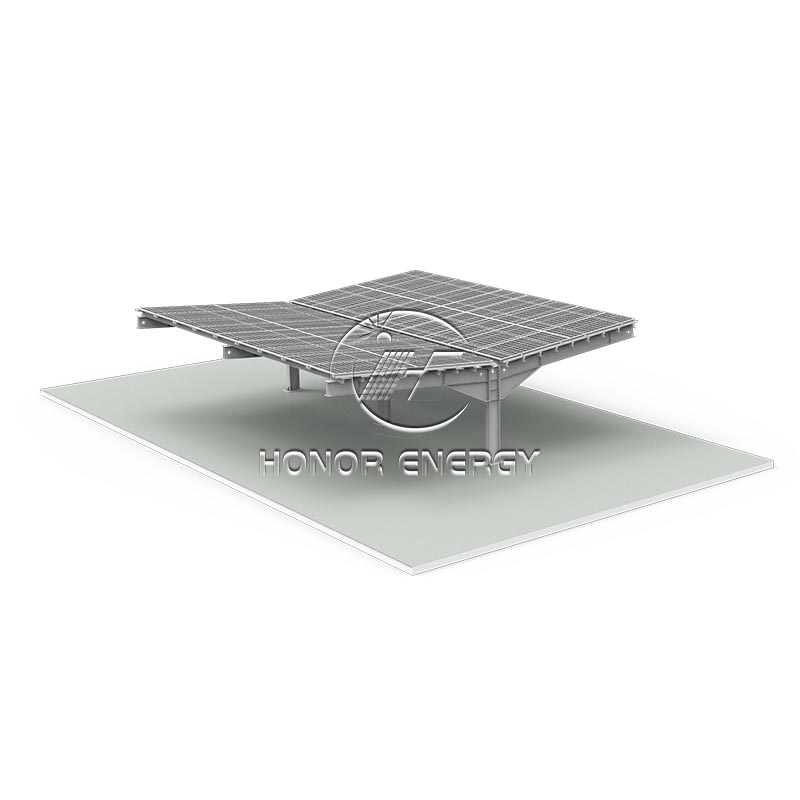
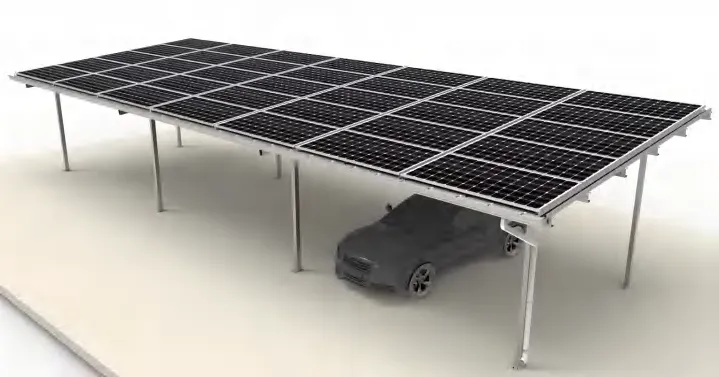
Chinese manufacturers hold clear advantages in production capacity, manufacturing costs, and export capabilities. These advantages, combined with the market growth trajectory, mean this is not a minor niche – it is a genuine growth segment. And within this segment, steel dominates the mainstream. Most PV carport support structures use either hot-dip galvanised steel or high-strength aluminium alloy. But looking at actual projects, steel structures remain the overwhelming choice in industrial parks, public parking lots, and highway service areas.
Aluminium versus steel
let the numbers speak for themselves
Aluminium has undeniable appeal – lightweight, corrosion-free, visually pleasing. Anodised AL6005-T5 aluminium looks great in high-end commercial carports. But here is the problem: aluminium has only one-third the elastic modulus of steel. For the same span and the same load, an aluminium beam deflects three times as much as a steel beam. To keep deflection within acceptable limits, aluminium sections have to be much larger than steel.
This brings us to the first issue – aluminium simply does not work well at large spans. Engineering analysis shows that a 6-metre span requires a 200×100 H-beam weighing 25-35 kg per metre. At 10 metres, steel needs a 300×150 section at 60-85 kg per metre. For aluminium? The same span requires nearly double the section size to achieve equivalent stiffness and strength. Bigger sections mean more material, and aluminium's cost advantage evaporates.
Now look at the pricing. Hot-dip galvanised steel racks in Q235B grade run around RMB 6,100-6,500 per tonne. Zinc-aluminium-magnesium coated steel in S350GD+ZM grade runs RMB 4,500-5,000 per tonne. Aluminium? Typically two to three times the price of steel per tonne. Anyone in procurement knows exactly what that difference means for the bottom line.
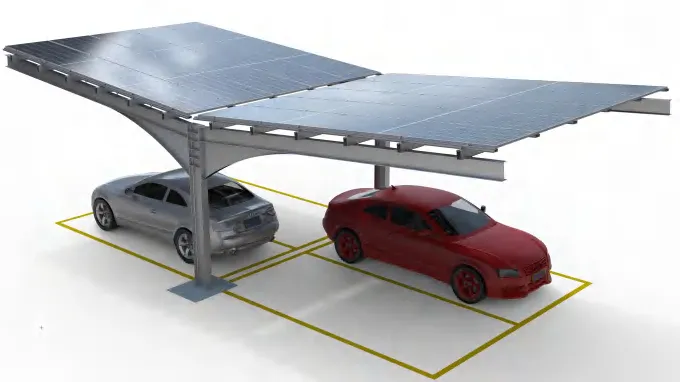
How steel solved the corrosion problem
Steel's biggest weakness has always been rust. Traditional hot-dip galvanised steel in outdoor carport environments lasts about 10-15 years. But technology has moved on.
Zinc-aluminium-magnesium (ZAM) coating is the game-changer. This ternary alloy coating (Zn-6% Al-3% Mg) forms a dense eutectic structure through continuous hot-dip processing. The most impressive feature is its "cut-edge self-healing" capability – after cutting or drilling, magnesium ions actively migrate to the cut edges and form a protective film, preventing red rust from spreading. Corrosion life extends from 10 years with traditional galvanising to over 25 years. ZAM coatings achieve over 3,000 hours in salt spray testing, far exceeding the 600 hours of conventional galvanised steel. In late 2025, China issued a national standard for Continuous Hot-Dip Zinc-Aluminium-Magnesium Alloy Coated Steel Sheets and Strips for PV Mounting Systems (YB/T 6422-2025), effective from 30 June 2026.
Hot-dip galvanising itself has also improved. Industry now requires coating thickness of at least 85 microns. Some projects use dual protection – hot-dip galvanising plus fluorocarbon topcoating, with zinc layers over 85 microns and IP65 protection rating for coastal environments. Steel carports now perform reliably even in humid coastal areas, significantly reducing long-term maintenance and repainting costs.
In short, steel's corrosion weakness is being progressively filled by new technologies. When the anti-corrosion life reaches 25 years, it matches the service life of PV modules perfectly.
Structural design
The biggest difference between carport racks and ground racks is span. Ground mounts have columns spaced 2-3 metres apart; carports frequently go 6, 8, or even 12 metres. And span affects loading exponentially – going from 6 to 12 metres doubles the column spacing but quadruples the bending moment on the primary beam. The formula is M = wL²/8 – span L is squared.
Steel excels in this scenario. High strength, high stiffness – steel sections can stay compact under heavy loads. Common steel carport materials include hot-dip galvanised carbon steel, high-strength galvanised square tubes, H-beams, and round steel tube structures – dense, solid, with load-bearing capacity far exceeding ordinary pipe sections. With scientific structural design, thicker main members and reinforced bracing, steel carports withstand strong winds, heavy snow, and hail without trouble.
Aluminium struggles here. Same span, same load – aluminium deflects three times as much. To meet the same deflection limits, sections have to be larger and heavier. Larger sections mean higher material costs and more difficult installation. That is why you almost never see pure aluminium solutions in large-span carport projects.
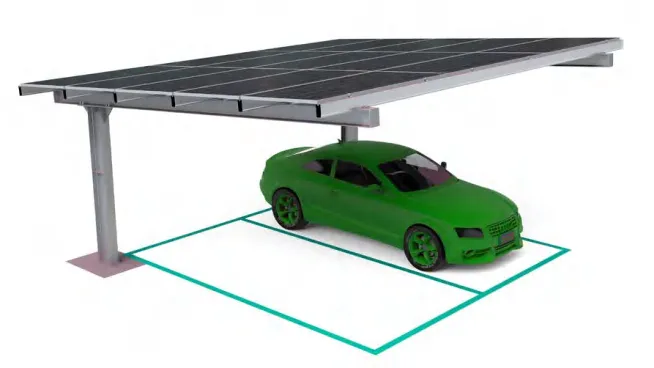
Standards are backing steel as well
Standardisation developments this year all favour steel.
In April, the industry standard Steel Sections for Photovoltaic Mounting Systems (YB/T 6441-2026) was officially released, effective 1 November 2026. It specifies classification, dimensions, and technical requirements for cold-formed steel sections and hot-rolled H-beams used in PV mounting. Lead drafting organisations include major steel producers like Ma'anshan Iron & Steel, Hebei Jinxi Iron & Steel, and Ningxia Longxiang New Energy.
In March, the Photovoltaic Carport Design Standard (Draft for Comments) was released, explicitly requiring steel structure design to comply with GB 50017. Loads must follow GB 50009, with Q235B or Q355B steel recommended. Hebei Province's local standard Design Code for Carport PV Power Generation Systems (DB13/T 5814-2023) has been in effect for over two years.
These standards give steel racks a clear and enforceable framework – what grade of steel to use, how thick, how to protect against corrosion, and how to conduct acceptance inspection. For procurement teams and engineers, that is peace of mind.
Real projects are overwhelmingly steel
Look at the projects this year.
China Power Construction Shandong Electric Power's Datang Jinhua project carport – 250×150×4.75mm carbon steel columns, 150×100×2.75mm carbon steel beams. Lanzhou Petrochemical's 5.7MW PV carport – rows of white arched steel structures. Binjiang Chuangzhi Enterprise Harbour steel carport project – winning bid price RMB 3.02 million. Shanghai-Wuhan Expressway expansion – newly built steel structure carport PV projects at service areas. Honghui New Energy's project – fixed portal steel frame structure, hot-dip galvanised throughout.
What do these projects tell you? From owners to design institutes to contractors, steel remains the default and preferred choice. Not because they have not considered aluminium – but because they have run the numbers and chosen steel.
Our conclusion
Xiamen Honor Energy has been in the PV mounting business long enough to know that material decisions are not made on impulse. Steel delivers the best overall outcome in carport applications across four dimensions: strength, stiffness, cost, and maturity. ZAM coating has solved the corrosion headache. Standards have addressed the specification gap. Steel structural design and construction processes are mature, well-documented, and widely understood by engineers and contractors alike.
Aluminium certainly has its place – small spans, projects with extremely high visual requirements, or cases where weight is a critical constraint. But for large-span, high-volume carport projects – which represent the vast majority of the market – steel is the unavoidable mainstream solution.
We will continue tracking ZAM steel applications and structural optimisation for larger-span steel carports through the second half of this year. Carports may be small in footprint, but material selection is no small matter. Getting it right from the start saves everyone a lot of trouble down the road.
Related News
- Why Balcony PV Is Reshaping Europe's Energy Landscape
- Solar Carport Market Diversifies: Single Post, double post, and Double-Wing Designs – Which Will Dominate?
- Fixed Mounting Structures at WFES Abu Dhabi 2026 – Exhibition Highlights
- Focus on RE+ 2026
- Innovation in PV Mounting Systems Takes Center Stage at Smart Energy 2026 in Sydney
- Agricultural-PV Mounting Systems: When Solar Power Meets the Soil
Leave me a message