Solar Carport Market Diversifies: Single Post, double post, and Double-Wing Designs – Which Will Dominate?
We at Xiamen Honor Energy have been in the solar carport game long enough to see the market flip from a free-for-all to a real engineering discipline.
It’s not just about slapping panels on sticks anymore – today, every beam, footing, and angle gets scrutinized. And the design choices? They’re getting more interesting by the year.
With the market valued between $530 million and $2.77 billion in 2025 (depending on the source) and projected to exceed $1 billion to $5.2 billion by 2034, the idle space above parking lots is turning into a hot "energy goldmine."
As EV penetration rises and net-zero policies tighten, project owners and EPC contractors face a critical question: which carport design—single post, double post, or double-wing—delivers the best bang for the buck?
And which one is poised to lead the pack? Let's break it down.
Single Post Carports: Space Savers, but Not for Windy Zones
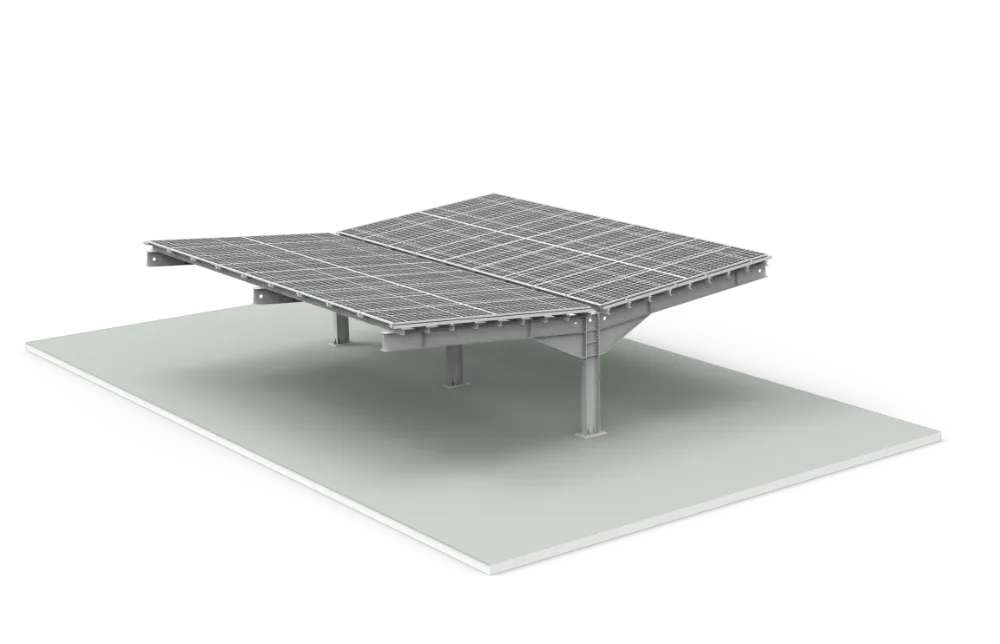
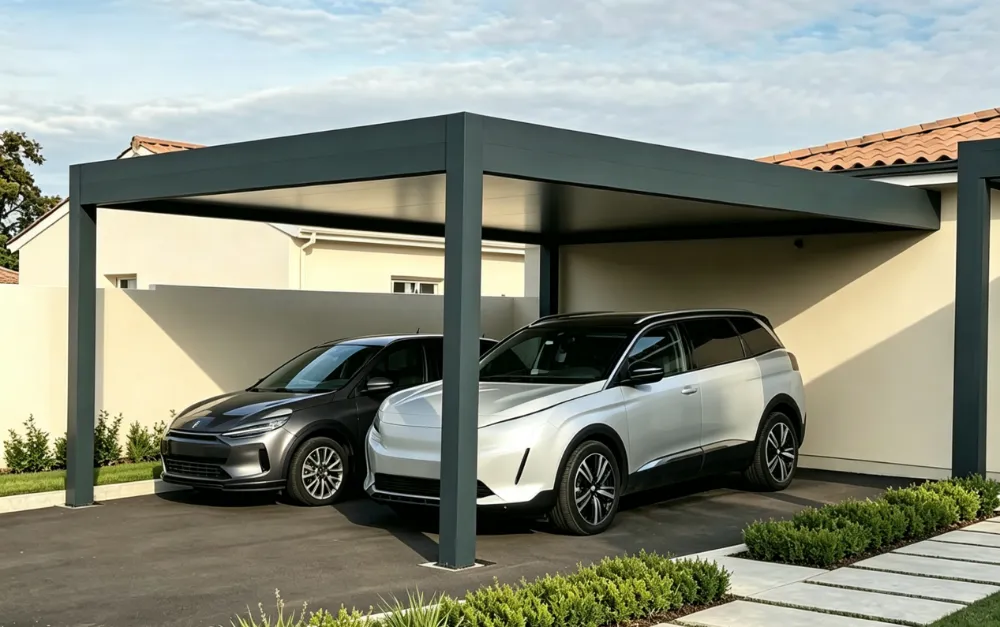
The Single Post design uses one post between every two parking bays. Its biggest selling point? Openness.
Anyone who's ever parked in a crowded garage knows the frustration of dodging pillars. By tucking the post right at the boundary between two bays, Single Post carports offer nearly unobstructed visibility, making in-and-out a breeze. From an installation standpoint, you use half the posts of a double post system, cutting on-site construction time by 15–20%. The clean, minimalist look also appeals to commercial complexes and high-end office buildings.
But there's a catch. The long cantilever design demands heavier, thicker main beams—otherwise the PV panels can develop micro-cracks from excessive deflection. More critically, a single footing must handle much higher bending moments, requiring stronger soil conditions. In high-wind regions, the lateral stability of Single Post structures lags noticeably behind double post alternatives. An industry friend once joked, "Single Post looks great—until typhoon season gives you sleepless nights."
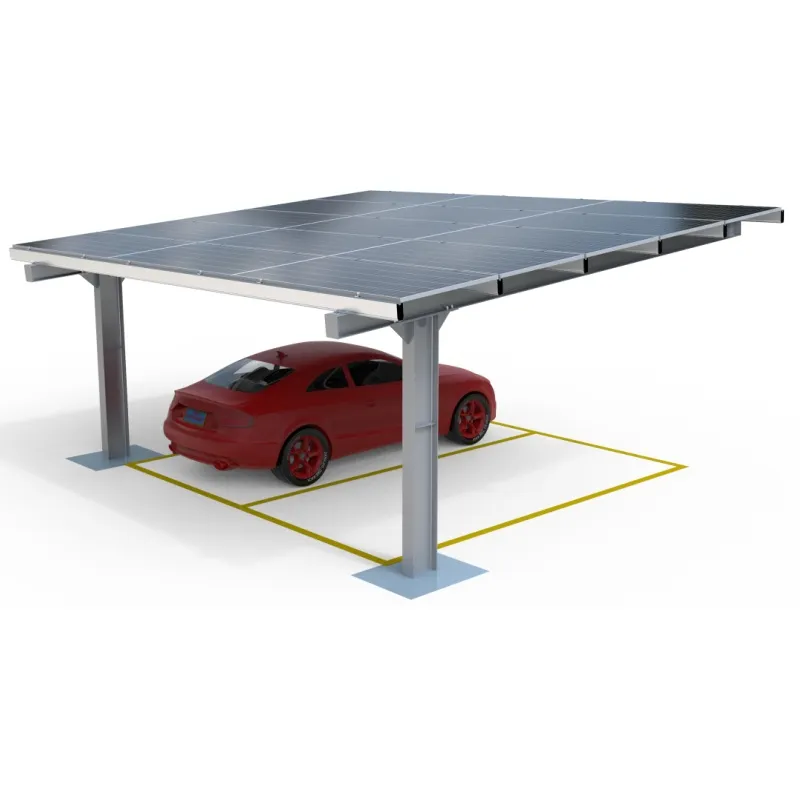
Double post Carports: Rock-Solid, but Watch the Sightlines
Double post solar carports place a post on each side of every parking bay, forming a portal frame. Two columns share the vertical load, so each post experiences far less bending moment than its Single Post counterpart. The redundancy is higher – even if one connection loosens, the other three nodes can hold things together. In areas with heavy snow loads or extreme winds, double post is the safer bet.
Cost-wise, many assume double post uses more steel, but that's not always true. In moderate wind zones (below 25 m/s), Single Post actually consumes 8–12% less steel. However, in sites requiring piles or rocky foundations, the deeper drilling cost for Single Post footings can erase that advantage. double post footings are smaller and more numerous, which sometimes works out cheaper. The downsides? Twice as many posts means obstructed sightlines, and backing into a bay requires extra caution. If underground utilities are complex, double post foundations can double the installation headache.
Double-Wing Carports: The Latecomer That's Stealing the Show
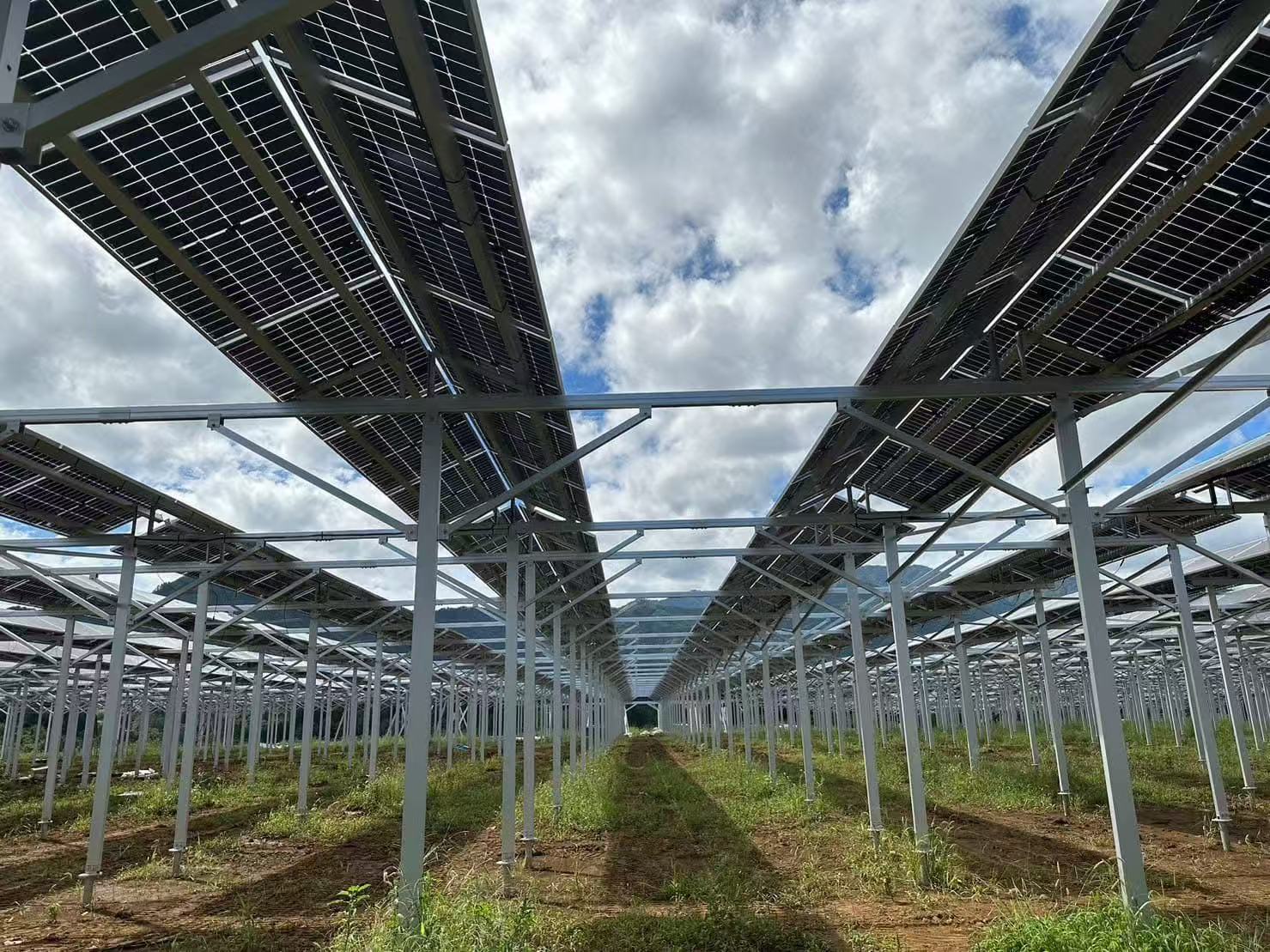
Double-wing carports extend two symmetrical sloped planes from a central column or beam, forming a V or butterfly shape. The clever bit: on the same two-bay footprint, a double-wing can hold six vertical PV modules, while a conventional single-slope roof fits only five. That jump in module density translates directly into more kilowatt-hours per square meter of land. What I like about the symmetrical design is how it balances those wind and snow loads – the torsional stress on the columns drops noticeably. Most systems clock in at 45–60 m/s for wind and clear 1.4 kN/m² for snow, which is honestly more than enough for most sites we've worked on.
Double-wing designs are rapidly gaining ground. Analysts note they've become the go-to choice for commercial parking lots, shopping malls, hospitals, and airports. Though initial investment is slightly higher than single-slope systems, the long-term payoff from higher energy density and structural efficiency often wins out. In short: Single Post wins on user experience; double-wing wins on generation yield.
Which Design Is Growing Fastest? double post Is the Cash Cow, Double-Wing the Growth Engine
Globally, double post carports still hold the largest market share – roughly 45% of revenue in 2024. That's unsurprising: the design is mature, well-understood, and low-risk – the "safe bet" for most projects.
But the fastest-growing segment is undeniably double-wing and smart PV carports. The smart solar carport market generated about $235 million in global sales in 2025 and is projected to hit $555 million by 2032, at a CAGR of 13.1%. Double-wing, as the poster child for high-density generation, is moving from a "differentiated option" to a "standard choice" – especially in regions with expensive land and high electricity tariffs, where every extra kilowatt-hour counts.
Single Post carports maintain steady demand in premium commercial projects thanks to their spacious feel, but limited by wind performance and foundation requirements, they're unlikely to be the main growth driver going forward.

The Future: From "Shade Canopy" to "Micro Energy Hub"
The evolution of solar carports is far from over. The trend we see is clear: carports are upgrading from passive "shade + generation" structures into active smart energy nodes.First, solar-storage-charging integration. Today's carport is no longer just PV panels over parking spaces – it's a micro-system that harvests solar power, stores it in batteries, dispatches it for EV charging, and reuses surplus electricity. A 2.6 MW project in Dongguan, China, is expected to generate over 3 million kWh annually using this model.
Second, AI-driven monitoring is becoming standard. The platform pulls live data on generation, arbitrage revenue from peak rates, and the status of every inverter and panel. That gives you full visibility across the entire lifecycle – no more reactive maintenance. To me, that's what turns a parking lot from a cost burden into a genuinely attractive zero-carbon asset that pays back over time.
Third, strong policy tailwinds. France now mandates solar canopies over large parking lots, and net-zero targets across the EU and Asia-Pacific are accelerating infrastructure investment. This policy momentum isn't letting up anytime soon.
So, back to the original question: which carport is worth your money? My take—it depends on the site, and always run the total cost-benefit. Choose double post for windy regions, Single Post for premium user experience, and double-wing for maximum generation. But if you want both high yield and aesthetic appeal, and want to ride the smart-energy wave, then a double-wing design paired with solar-storage-charging integration is probably the most compelling option on the table today.
After all, every ray of sunshine over a parking bay deserves to be put to good use.
Related News
- Why Balcony PV Is Reshaping Europe's Energy Landscape
- Fixed Mounting Structures at WFES Abu Dhabi 2026 – Exhibition Highlights
- The Material Debate in Solar Carport Mounting: Why Steel Remains the Most Reliable Choice?
- Focus on RE+ 2026
- Innovation in PV Mounting Systems Takes Center Stage at Smart Energy 2026 in Sydney
- Agricultural-PV Mounting Systems: When Solar Power Meets the Soil
Leave me a message