Smart Tracking and Scenario-Based Solutions Take Center Stage at Intersolar Europe 2026
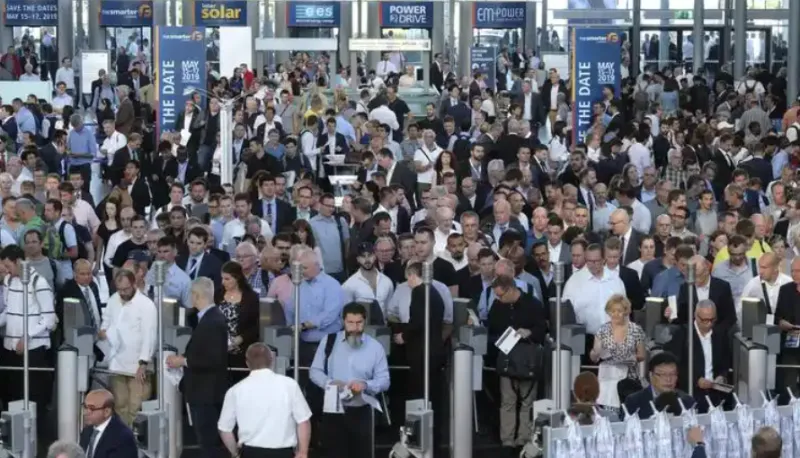
Munich, Germany – June 23–25, 2026 — Intersolar Europe, one of the world's most influential exhibitions for the renewable energy sector, was held at the Messe München exhibition center. This year's event brought together leading players across the global photovoltaic supply chain, spanning 101,000 square meters of exhibition space and attracting more than 3,000 exhibitors from over 50 countries and regions. As the structural backbone of PV power plants, solar mounting and tracking systems emerged as a major focal point, revealing three clear industry trends: the full-scale penetration of intelligent tracking technologies, a surge of scenario-specific solutions (such as agrivoltaics), and intensifying competition in full-lifecycle service capabilities.
Intelligent Tracking Goes Mainstream, with Smart Control Becoming Standard
Tracking systems have become the default choice for large-scale ground-mounted PV plants across Europe, owing to their measurable gains in energy yield. At this year's show, virtually every tracking solution on display was equipped with intelligent control modules, shifting the paradigm from passive sun-chasing to active sensing and dynamic response.
A number of manufacturers showcased control systems integrated with AI-driven weather-response algorithms, capable of real-time monitoring of wind speed, direction, snow load, and other meteorological parameters. These systems automatically adjust tilt angles or activate stow protection modes, safeguarding structural integrity while maximizing power generation. Multi-point drive technologies and electrical linkage control schemes were also widely featured, effectively mitigating the torsional instability risks associated with traditional single-point drives in large-span arrays—particularly valuable for Europe's windy and complex-terrain project sites.

In addition, digital twin platforms and cloud-based remote O&M systems have become standard offerings within premium mounting solutions. Through SCADA-enabled cloud platforms, operators can remotely monitor each tracker, receive fault alerts, and fine-tune angle setpoints, dramatically reducing on-site inspection costs. Industry observers note that trackers are no longer mere mechanical structures, but rather intelligent terminals embedded within the plant's "neural network."
Scenario-Specific Solutions Take the Spotlight: Agrivoltaics, Floating PV, and Flexible Mounting
As European countries impose increasingly stringent requirements on dual land-use, PV mounting applications are diversifying beyond conventional ground-mounted plants into agricultural land, water surfaces, building facades, and more. At this year's exhibition, "customized scenario-based solutions" became a central theme across many booths.
In the agrivoltaics segment, multiple mounting suppliers presented high-ground-clearance, large-span tracking systems. Some solutions offer flexible height adjustments ranging from 1.3 to 5 meters, allowing sufficient space for farming machinery and crop growth. Notably, certain control software now features a dedicated "harvest mode," which tilts modules to a near-vertical position during crop seasons, facilitating the smooth passage of large agricultural equipment.
Floating PV also drew considerable attention. Several manufacturers unveiled floating systems using high-density polyethylene floats and corrosion-resistant metal structures, with eco-friendly designs tailored for inland lakes and reservoir projects across Europe. Advances in both buoyancy materials and mooring systems were highlighted.
Flexible cable-suspended mounting technology emerged as another technical highlight. Offering long-span, minimal-pile foundations, these solutions prove particularly advantageous for irregular terrains such as mountainous areas, mining sites, and landfills—making them a standout innovation for European countries with complex topography.
Digital Design Tools and Full-Lifecycle Services Emerge as New Competitive Frontiers
This year's Intersolar Europe sent a clear signal: competition within the mounting industry has evolved beyond hardware specifications to encompass digital service capabilities and full-lifecycle value.
On the project development front, a growing number of mounting solution providers showcased intelligent selection and automated design platforms. By inputting basic project parameters—location, terrain conditions, module type, etc.—the system can automatically generate optimized array layouts, bill of materials, and structural calculation reports, significantly shortening the preliminary engineering design cycle.
At the operational stage, digital O&M platforms have become a key differentiator. With remote monitoring, predictive maintenance alerts, and performance analytics, these tools enable asset owners to manage their mounting systems with greater precision and lower labor costs.
Outlook: From Hardware Supply to Integrated Solution Ecosystems
Against the backdrop of the EU's raised renewable energy target of 42.5%, Europe's PV installation demand continues its upward trajectory. This year's Intersolar Europe made it clear that the PV mounting industry is undergoing a fundamental transition—from a focus on standalone structural supply to an integrated solutions ecosystem that combines intelligent tracking algorithms, scenario-customized engineering, and full lifecycle digital services.
As the global PV supply chain deepens its presence in Europe, the ability to deliver not only advanced hardware but also localized technical support, rapid-response after-sales service, and data-driven operational tools will be the defining factor separating market leaders from the rest. In an increasingly competitive landscape, the winners will be those who can transform the mounting system from a passive support structure into an active contributor to the smart, efficient, and sustainable PV plant of the future.
Related News
- Why Balcony PV Is Reshaping Europe's Energy Landscape
- Solar Carport Market Diversifies: Single Post, double post, and Double-Wing Designs – Which Will Dominate?
- Fixed Mounting Structures at WFES Abu Dhabi 2026 – Exhibition Highlights
- The Material Debate in Solar Carport Mounting: Why Steel Remains the Most Reliable Choice?
- Focus on RE+ 2026
- Innovation in PV Mounting Systems Takes Center Stage at Smart Energy 2026 in Sydney
Leave me a message